Faith Nyasuguta

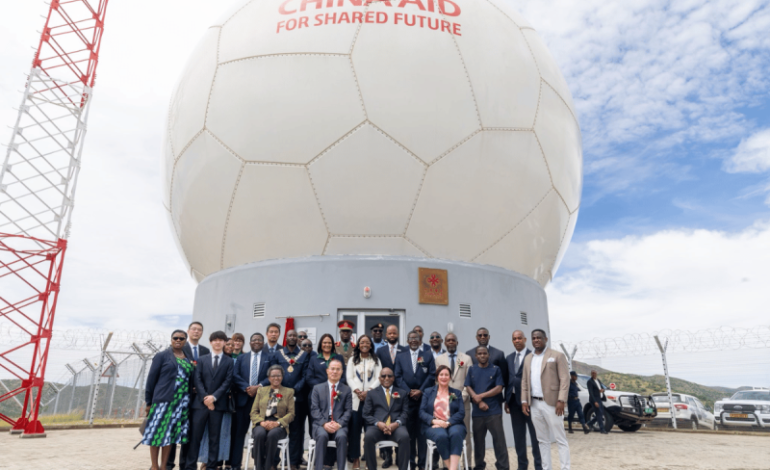
China has formally transferred a newly constructed satellite ground station to Namibia, expanding Beijing’s growing footprint in Africa’s space and remote-sensing sector. The facility, situated at the Telecom Earth Station outside Windhoek, is designed to strengthen Namibia’s ability to receive, process and utilise satellite data for national development.
The installation will allow Namibian authorities to directly access imagery and environmental monitoring data from orbiting platforms, including the China-Brazil Earth Resources Satellite (CBERS-4). Officials say the enhanced capability will support applications ranging from agriculture and urban planning to disaster monitoring and natural resource management.

According to Chinese state media, the ground station significantly upgrades Namibia’s technical capacity in handling remote-sensing data – a strategic asset in an era where climate variability, food security and infrastructure planning increasingly rely on satellite intelligence.

The handover forms part of China’s broader effort to deepen technological cooperation across Africa. In recent years, Beijing has financed and delivered satellites, research laboratories and tracking infrastructure in multiple African states, positioning itself as a key partner in the continent’s digital and space ambitions.

The timing is notable. As Western development engagement fluctuates in parts of Africa, China has continued to advance science and technology partnerships framed around mutual growth and “shared development.” Chinese officials maintain that such projects aim to broaden participation in the global space economy and ensure developing countries are not excluded from technological progress.
Yet analysts observe that overseas ground stations also extend China’s global observation architecture. Facilities built abroad can integrate into wider satellite networks, potentially enhancing data reach and scientific collaboration. While Namibia retains ownership, Chinese technical teams are expected to provide ongoing support following the training of 14 Namibian specialists under the programme.

China’s ambassador to Namibia, Zhao Weiping, emphasised that the country will independently manage and operate the station. A second phase of expansion is already being considered, signalling that cooperation is likely to deepen.
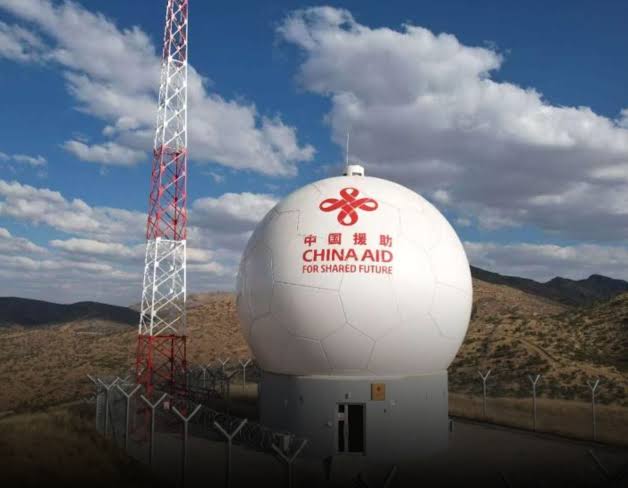
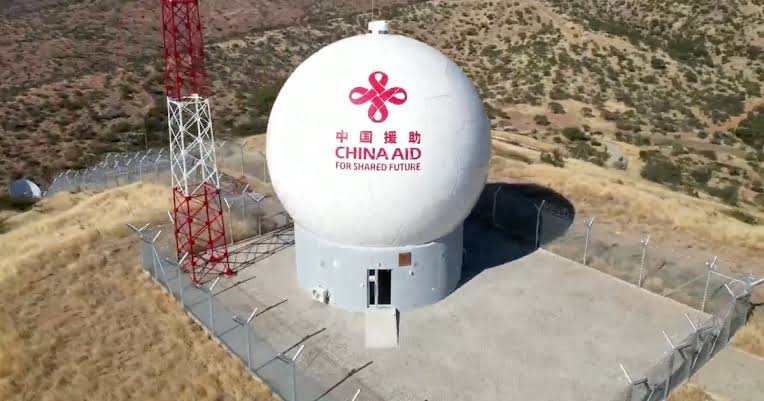
Images released after the ceremony show the dome-shaped structure bearing the words: “China Aid for Shared Future” – a phrase that captures both the symbolism and the strategic undertones of Beijing’s expanding presence in Africa’s emerging space sector.
RELATED: