Faith Nyasuguta

China is ramping up its engagement with Africa through a high-level diplomatic tour spanning South Africa, Kenya and Seychelles, shedding a light on Beijing’s expanding economic and strategic footprint across the continent. The visit, led by Chinese Vice President Han Zheng, signals a renewed push to strengthen partnerships in trade, infrastructure and development.
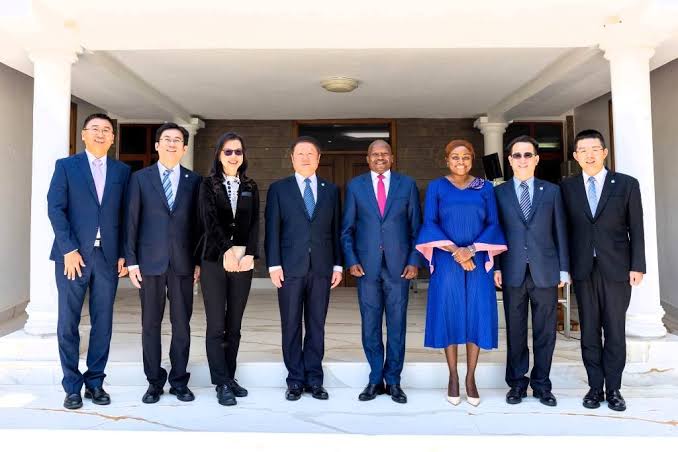
Han Zheng’s arrival in Nairobi marked the first leg of the tour, where he was received by senior government officials including Musalia Mudavadi. The visit follows invitations from top leaders in all three countries, reflecting the importance African governments place on maintaining close ties with Beijing amid shifting global alliances.

Although Chinese authorities have offered limited public detail, analysts view the tour as part of a broader effort to reinforce relationships that have become central to Africa’s development landscape. Over the past decade, China has positioned itself as one of the continent’s most influential partners, particularly through large-scale infrastructure financing and construction.

In Kenya, the timing of the visit is especially notable. It comes shortly after President William Ruto and Uganda’s Yoweri Museveni relaunched the extension of the Standard Gauge Railway toward the Ugandan border. The project, which had stalled for years, is a flagship example of Chinese-backed infrastructure that continues to shape regional connectivity. Once completed, the line is expected to strengthen trade corridors by linking inland East Africa more efficiently to the Indian Ocean port of Mombasa.

China’s influence extends far beyond Kenya. Through the Belt and Road Initiative, Beijing has financed and built a wide range of projects across Africa, including highways, railways, ports, power plants and industrial zones. These investments have significantly altered the economic landscape in many countries, particularly in East and Southern Africa, where infrastructure gaps have historically constrained growth.
In South Africa, Chinese involvement has been prominent in sectors such as mining, renewable energy and technology, reinforcing ties with one of the continent’s most industrialised economies. Meanwhile, in Seychelles, cooperation has focused on port development and tourism infrastructure, helping the island nation strengthen its economic resilience.

Observers say the three-nation tour goes beyond routine diplomacy. It reflects China’s strategy of pairing high-level political engagement with long-term economic investment, a combination that has enabled Beijing to deepen its influence while supporting development priorities across the continent.

For African nations, this growing partnership presents both opportunities and strategic considerations. Chinese financing and expertise offer a pathway to accelerate infrastructure development and industrialisation. At the same time, governments are increasingly navigating how to balance these ties with relationships with Western partners, ensuring that engagement with Beijing aligns with national interests.
As the tour progresses, it highlights a shifting global dynamic in which Africa is becoming an increasingly important arena for geopolitical and economic cooperation. China’s continued outreach signals its intent to remain a central player in shaping the continent’s future, not just through investment, but through sustained diplomatic presence and partnership.
RELATED: