Faith Nyasuguta

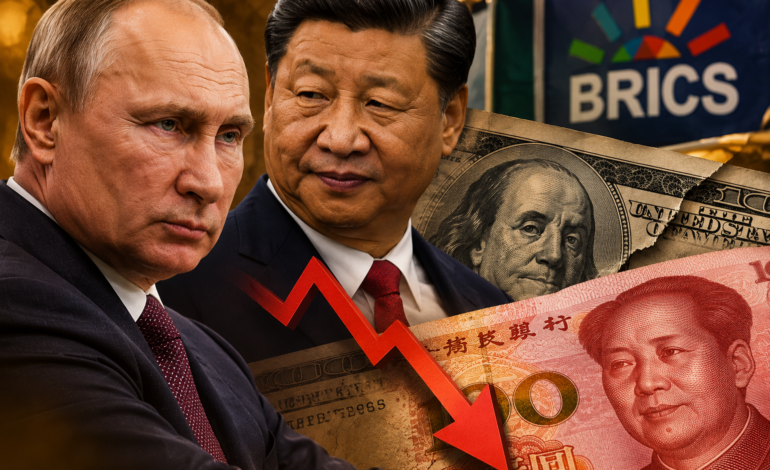
Russia’s ambitious campaign to reduce its dependence on the US dollar by embracing China’s yuan has suffered a major setback, exposing the difficulties of challenging America’s dominance of the global financial system.
After years of encouraging BRICS countries to embrace alternative currencies, Moscow is increasingly turning to its own ruble as Chinese banks retreat from processing Russian transactions over fears of American sanctions.

According to Bloomberg, citing Russian central bank data, the yuan’s share of payments for Russian exports has fallen to 22% in 2026, roughly half its mid-2024 peak. Meanwhile, the ruble now accounts for 69% of payments Russia receives for exports to Asian countries.

The figures suggest that Russia’s attempt to reduce reliance on the dollar has not ended, but its strategy of using the Chinese yuan as a major alternative has encountered significant obstacles.

How Russia’s Plan Initially Gained Momentum
Russia accelerated its shift away from Western currencies after its February 2022 invasion of Ukraine triggered sweeping financial sanctions. With access to international banking systems increasingly restricted, Moscow turned towards China and began conducting more trade in yuan.

By 2024, the Chinese currency had become central to Russia’s international payments, accounting for a substantial share of foreign trade settlements. President Vladimir Putin also championed greater use of national currencies among BRICS members, arguing that Washington’s use of financial sanctions demonstrated the risks of depending on the dollar.
At the October 2024 BRICS summit in Kazan, Putin accused the United States of weaponising its currency against geopolitical rivals. The broader objective was to create a financial environment in which countries could trade without relying so heavily on American-controlled payment channels.
For Russia and other countries concerned about exposure to US sanctions, the proposal offered an appealing alternative. However, implementing that vision proved considerably more complicated.
American Sanctions Disrupt the Yuan Strategy
The turning point came in June 2024, when Washington expanded secondary sanctions targeting foreign financial institutions involved in transactions with sanctioned Russian entities. Under the measures, banks facilitating certain transactions risked losing access to American financial services and dollar-clearing channels. The consequences extended beyond American banks.
Chinese financial institutions, despite Beijing’s close economic relationship with Moscow, became increasingly cautious about processing Russian payments. For major Chinese banks, maintaining access to the American financial system was often more commercially important than expanding transactions with sanctioned Russian companies.
Some banks consequently restricted payments, forcing Russian businesses to seek alternative arrangements through smaller regional institutions and intermediaries. These workarounds introduced additional costs and complications.
Russian logistics company STT Logistics estimated that some alternative payment arrangements could cost businesses as much as 20% of the transferred amount. However, the difficulties have not affected every company equally, with some Russian businesses reporting that yuan payments continue without significant disruption.
China Remains Russia’s Biggest Trading Partner
Despite the payment challenges, China remains Russia’s largest trading partner, accounting for more than a third of Moscow’s foreign trade turnover. The two countries continue to maintain extensive economic ties, particularly in energy, manufacturing and consumer goods. Yet growing trade has not translated into the yuan becoming a dominant international currency.
The Chinese currency still represents a relatively small share of global payments, while the US dollar remains deeply embedded in international trade, banking and financial markets. China’s capital controls and restrictions on cross-border financial flows also limit the yuan’s ability to compete directly with the dollar.
For Moscow, this creates a difficult reality: even countries seeking alternatives to the American currency remain connected to a global banking system in which US financial influence is difficult to escape.
What Does This Mean for BRICS?
Russia’s experience highlights a major challenge facing BRICS as members explore ways to reduce their dependence on the dollar. The bloc, which includes major emerging economies such as China, India, Brazil and South Africa, has increasingly discussed expanding trade in national currencies and developing alternative payment arrangements.
African members Egypt and Ethiopia are also part of these discussions. However, BRICS countries have not agreed to replace the dollar with a single alternative currency. Their economic interests, financial systems and relationships with Western markets differ considerably.
Russia’s difficulties demonstrate that adopting another currency does not automatically eliminate exposure to American sanctions, particularly when the banks facilitating those transactions depend on access to US financial markets.
Russia’s Dollar Challenge Is Far From Over
The declining use of the yuan does not mean Russia has returned to depending primarily on the dollar. Instead, Moscow is increasingly using rubles for international transactions, particularly with Asian trading partners.
This represents a change in how Russia is pursuing financial independence rather than a complete abandonment of its de-dollarisation ambitions. Nevertheless, the retreat of Chinese banks from some Russian transactions illustrates the limitations of replacing one foreign currency with another.
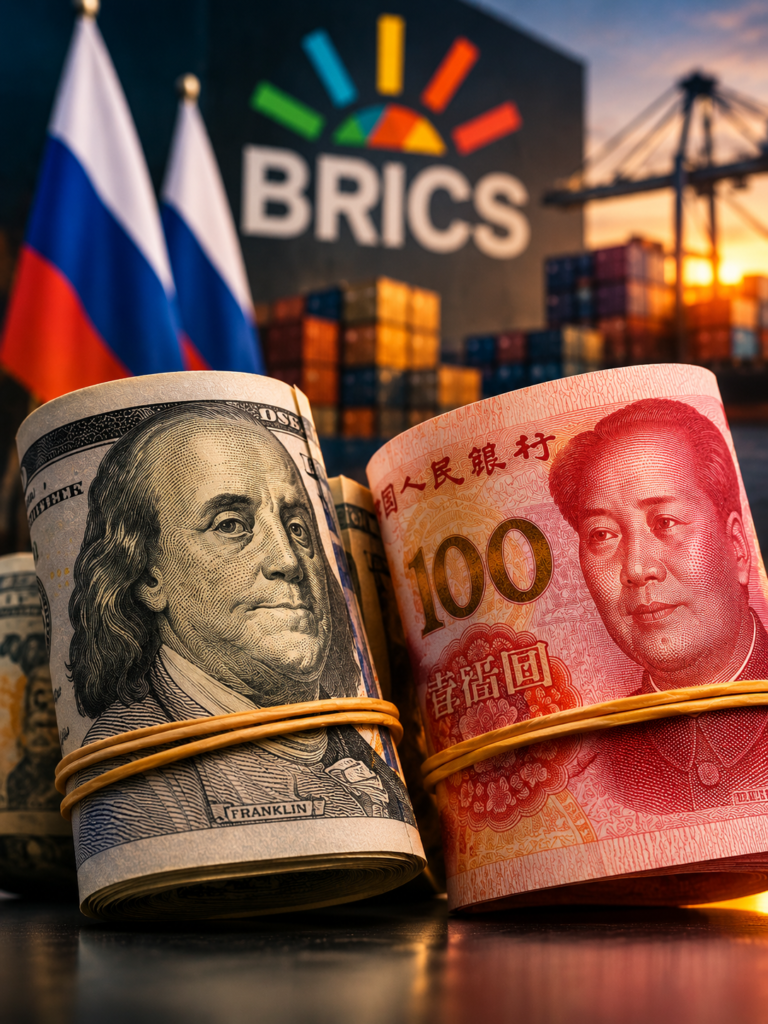
Russia wanted to reduce its vulnerability to American financial pressure. But its growing reliance on the yuan exposed it to a different problem: Chinese banks were unwilling to risk their access to the US financial system.
The experience offers a broader lesson for countries seeking greater financial independence. Building alternatives to the dollar requires more than political agreements and currency substitutions. It also demands reliable banking infrastructure, international confidence and financial institutions willing to withstand external pressure.
For now, Russia’s attempt to challenge dollar dominance has encountered a significant obstacle, while Washington’s influence over global banking continues to shape how countries conduct international trade.
If even Russia and China struggle to conduct trade without the shadow of American financial sanctions, how realistic is the BRICS ambition of reducing the dollar’s global dominance?
RELATED: