Wayne Lumbasi

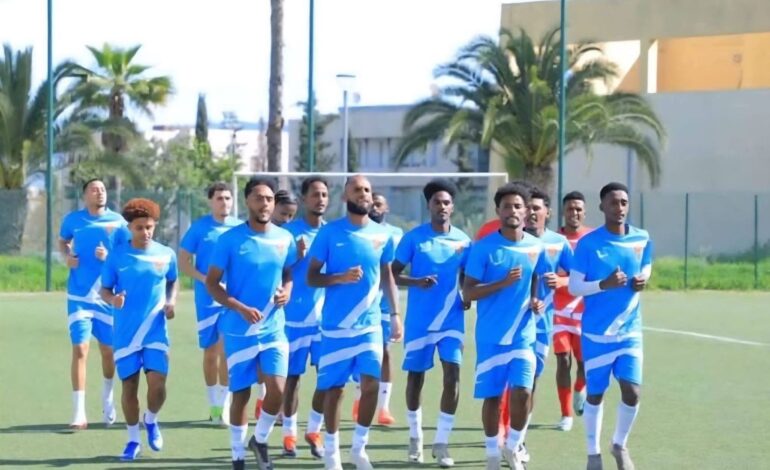
Seven members of Eritrea’s national football team have reportedly disappeared in South Africa following their participation in qualifiers for the Africa Cup of Nations, in an incident that has once again drawn international attention to the country’s recurring athlete defections. The players, who had traveled as part of the national squad, failed to return home with the rest of the team, raising immediate concerns among football authorities and observers.
The Eritrean side had been competing in preliminary qualification matches for the 2027 AFCON tournament, facing Eswatini in a two-legged tie. Their strong performance, which secured progression to the next round, was initially seen as a positive step for a team seeking to re-establish itself in continental football after years of inconsistency and withdrawal from major competitions. However, the disappearance of the players has quickly overshadowed that achievement, shifting focus from sporting success to a familiar and troubling pattern.

According to reports, the seven players failed to report for departure as the team prepared to leave South Africa, effectively absconding while still in the country. While officials have yet to release full details, such incidents are widely understood to be deliberate, with athletes often choosing not to return to Eritrea due to personal, economic, or political reasons. In many previous cases, players who have disappeared during international assignments have later sought asylum in foreign countries.

This is not the first time Eritrean football has been affected by such developments. Over the years, multiple players have vanished during overseas tournaments, including a widely reported case during the CECAFA Cup in 2009, when several members of the national team went missing while in Kenya. Similar incidents have occurred in other countries, creating a persistent challenge for Eritrean sports authorities and contributing to the country’s periodic withdrawal from international competitions.

The underlying causes of these defections are often linked to conditions within Eritrea itself. The country has long been associated with strict governance, including a system of national service that can be indefinite, as well as limited economic opportunities for young people. For athletes, international travel presents a rare opportunity to leave the country legally, and for some, it becomes a chance to pursue a different future abroad. This broader context has turned sporting events into moments of high risk for team officials, who must balance participation with the possibility of losing players.
For Eritrean football, the latest incident represents a significant setback. Losing a large portion of the squad not only weakens the team competitively but also disrupts long-term development efforts. It may also affect the country’s standing with continental football authorities such as the Confederation of African Football, particularly if such incidents continue to impact team commitments and participation in scheduled fixtures.

Beyond the immediate sporting consequences, the disappearance of the seven players highlights a deeper and more complex reality. It reflects the intersection of sport, migration, and national conditions, where football becomes more than just a game it becomes a pathway for escape. While the fate of the players remains uncertain, their decision underscores a pattern that has defined Eritrean sport for years, raising difficult questions about the future of the national team and the broader environment from which it draws its talent.
RELATED: