Wayne Lumbasi

Atlanta, Georgia, is increasingly positioning itself as “America’s gateway to Africa,” seeking to strengthen trade, investment, cultural, and educational ties between the United States and the African continent.
The city’s effort comes at a time when traditional national-level channels with African governments are becoming more uncertain, creating opportunities for cities and diaspora networks to play a larger role in international engagement. Central to this push is the initiative known as Atlanta Phambili, launched in 2024. The program brings together U.S. and African government officials, business leaders, and institutional partners to build economic and cultural bridges. By hosting delegations from African nations, particularly South Africa, Atlanta aims to create concrete channels for trade, investment, and people-to-people connections that go beyond formal diplomacy.


Atlanta’s credibility as a “gateway” is rooted in its unique combination of economic, cultural, and diaspora assets. The city is widely recognized as a hub of African-American culture and entrepreneurship, earning the nickname “Black Mecca” due to its vibrant communities and institutions.
Atlanta also has extensive logistical and transportation infrastructure, including Hartsfield–Jackson Atlanta International Airport, one of the busiest airports in the world, facilitating international trade and travel.

Additionally, the city’s thriving creative industries in film, music, and media make it an attractive partner for cultural and business exchanges with Africa. These factors combine to position Atlanta as a natural bridge for connecting African nations with U.S. markets and institutions.


The Atlanta Phambili initiative translates the city’s “gateway” ambitions into tangible programs. Trade and investment platforms, such as the Africa Trade Desk, aim to connect African exporters with U.S. retailers, lowering barriers to entering American markets. At the same time, cultural and creative collaborations foster exchanges in entertainment, arts, and media, leveraging Atlanta’s strong creative economy and African diaspora connections.
Academic partnerships, institutional cooperation, and people-to-people programs further strengthen the city’s role as a hub for sustained engagement between the two continents. Together, these efforts form a multidimensional approach that extends beyond symbolic branding into actionable initiatives.

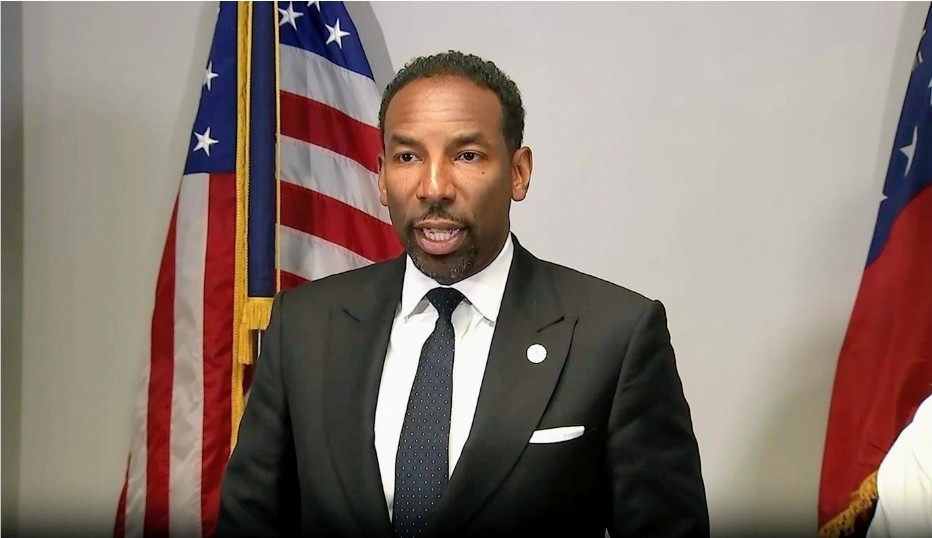
Under Mayor Andre Dickens leadership, Atlanta has actively embraced this gateway to Africa vision. In 2024, Dickens led a delegation to South Africa as part of the Atlanta Phambili initiative, a subnational diplomacy effort designed to deepen economic, cultural, educational, and trade ties between Atlanta and African cities. He has emphasized that Atlantas strengths in technology, logistics, infrastructure, and creative industries make it a premier destination for South African investment, signaling that the city aims not only for symbolic connection but for concrete partnerships.
Under his administration, these efforts reflect a broader push to expand Atlantas global reach, positioning the city not only as a US urban center, but as a hub for trans Atlantic exchange with Africa.
However, the “gateway” vision faces challenges. City-level efforts, while innovative, cannot fully replace national-level diplomacy when it comes to large-scale infrastructure, strategic security cooperation, or continent-wide trade agreements.
The initiative’s success depends on consistent follow-through, including private-sector participation, institutional commitment, and supportive policy frameworks. There is also the question of whether cultural and diaspora-driven engagement can translate into equitable economic benefits for African partners, particularly in sectors outside creative industries or small-scale trade.
For African countries, including Kenya, Atlanta’s emergence as a “gateway” offers both opportunity and caution. On one hand, it provides new pathways for trade, investment, and cultural exchange through diaspora networks and city-level initiatives, complementing national-level agreements and continental strategies like the African Continental Free Trade Area (AfCFTA).
On the other hand, it cannot replace formal agreements or federal-level guarantees, which remain critical for long-term strategic and economic stability. This dynamic reflects a broader shift in U.S.–Africa engagement, where city-led and network-based diplomacy is becoming an increasingly important supplement to traditional government-to-government relations, especially in Trump’s administation, America First policy.
RELATED
2023 MANDELA WASHINGTON FELLOWS FROM GHANA MAKE THEIR WAY TO AMERICA
GEOPOLITICAL TRENDS RESHAPING AFRICA’S ECONOMY IN 2025
DENMARK LAUNCHES $61M PUSH TO ATTRACT AFRICAN STUDENTS IN STRATEGIC IMMIGRATION SHIFT
CHINA TO SCRAP ALL TARIFFS ON AFRICAN EXPORTS TO STRENGTHEN TRADE TIES