Wayne Lumbasi
Somaliland has offered the United States potential access to strategic mineral resources and the option of establishing a military base on its territory as part of a broader effort to secure formal international recognition of its independence, a status it has sought since declaring separation from Somalia in 1991.
The self-governing territory, which operates with its own government, security forces, currency, and electoral system, is increasingly positioning its natural resource potential and strategic geographic location as bargaining tools to attract global partnerships that could strengthen its case for statehood.

The proposal centers on cooperation in the exploration and development of critical minerals such as lithium, rare earth elements, and other strategic resources, alongside expanded security collaboration tied to its location along the Gulf of Aden, a vital maritime corridor connecting the Red Sea to global shipping routes. By linking resource access and possible military cooperation to diplomatic engagement, Somaliland is signaling a shift toward transactional diplomacy, using economic and strategic incentives to gain political legitimacy after more than three decades of functioning as a de facto state without widespread international recognition.

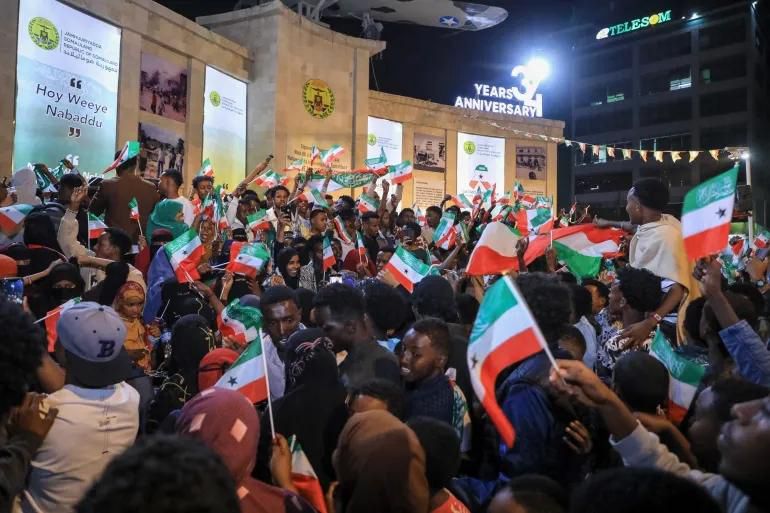
The territory’s leadership has increasingly emphasized its relative political stability and governance record in contrast to broader regional insecurity, presenting itself as a reliable partner in the Horn of Africa. Its coastline and proximity to major maritime routes have elevated its strategic relevance at a time when global powers are intensifying their focus on securing trade corridors and strengthening military logistics networks in the Red Sea and Gulf of Aden region.
Berbera port, a key infrastructure asset undergoing expansion in recent years, has emerged as a central component of Somaliland’s strategic value, serving as a logistics gateway that could support both commercial and security operations. The port’s development has attracted growing international interest, further reinforcing the territory’s efforts to position itself as a regional trade and security hub.
However, no formal agreement has been announced regarding mineral concessions or military basing arrangements, and there has been no confirmation of any policy shift toward recognition. The issue remains diplomatically sensitive, as most countries and multilateral organizations continue to uphold Somalia’s territorial integrity in line with longstanding African Union principles on borders and sovereignty.
Any move toward formal recognition in exchange for strategic access would carry far-reaching geopolitical implications, potentially reshaping alliances in the Horn of Africa, influencing maritime security calculations in the Gulf of Aden, and intensifying global competition over critical mineral supply chains.
For Somaliland, the outreach reflects a calculated escalation in its diplomatic strategy, combining economic opportunity, security cooperation, and geographic leverage in a renewed bid to transition from de facto autonomy to internationally recognized statehood
RELATED: