Faith Nyasuguta

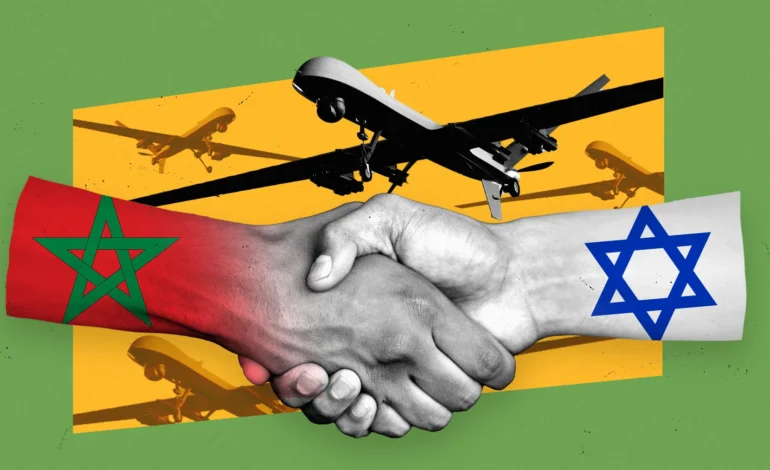
Israel and Morocco have taken a significant step in strengthening their security relationship after signing a joint military work plan covering 2026, cementing a new phase of defence cooperation between the two countries. The agreement comes as Tel Aviv and Rabat mark five years since the restoration of diplomatic ties under the U.S-brokered Abraham Accords, showing how their relationship has moved from symbolic normalisation to structured military partnership.
The deal was concluded in Tel Aviv during the latest meeting of the Israel – Morocco Joint Military Committee, which has emerged as the central forum for coordinating bilateral defence relations. According to the Israel Defense Forces (IDF), the agreement followed several days of closed-door discussions, strategic briefings and professional exchanges involving senior military officials from both sides.

In a statement, the IDF described the meeting as another milestone in deepening security cooperation with Morocco, which it called a key partner for regional stability. Israeli military planners noted that Rabat has gone beyond diplomatic gestures to embrace long-term defence coordination, reflecting growing trust and shared strategic interests.

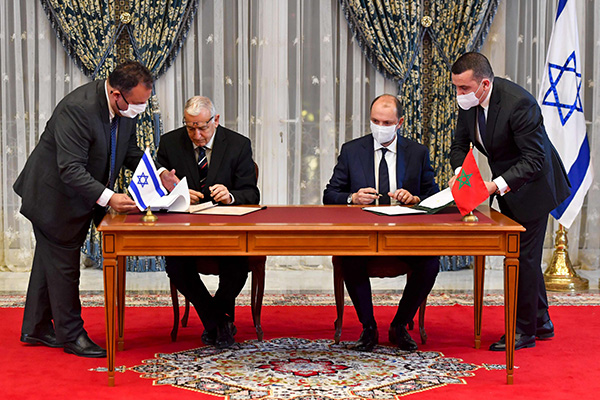
The 2026 military work plan focuses on sustained force development, strategic planning and institutional cooperation rather than short-term tactical engagements. Officials familiar with the discussions said the framework will guide consultations, joint activities and regular military dialogue throughout the year, enabling both sides to align their defence priorities as regional security challenges continue to evolve.

For Morocco, the agreement fits into a broader effort to modernise its armed forces and diversify its defence partnerships. Since normalising relations with Israel in December 2020, Rabat has steadily expanded military cooperation, particularly in air defence, drone technology, intelligence gathering and surveillance systems. These capabilities are seen as critical as Morocco seeks to reinforce its security posture amid tensions over Western Sahara and increasing instability across the Sahel region.
In recent years, Morocco has also sharply shifted its arms procurement strategy, increasingly favouring Israeli defence firms over traditional European and American suppliers. Among the most notable acquisitions is Israel’s Barak MX air defence system, which enhances Morocco’s ability to counter aerial threats. Rabat has also purchased reconnaissance satellites and ordered ATMOS 2000 self-propelled artillery systems from Israeli defence company Elbit Systems in a deal estimated at around 200 million euros.

The ATMOS 2000 systems consist of truck-mounted 155mm howitzers equipped with automated loading mechanisms and advanced digital fire-control technology. Capable of striking targets at distances exceeding 40 kilometres, the artillery significantly boosts Morocco’s long-range firepower and battlefield responsiveness.
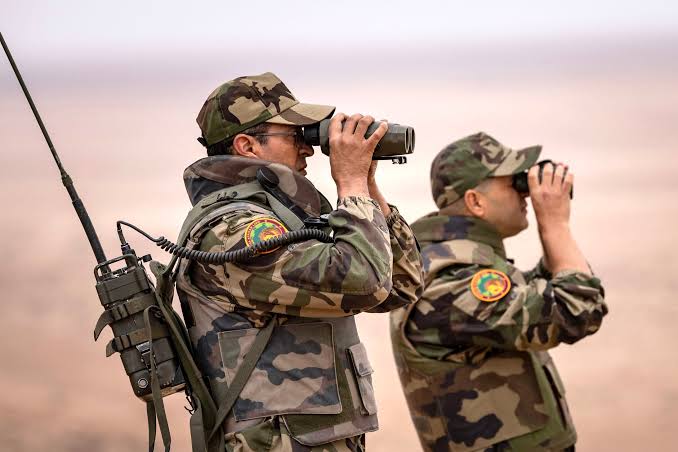
From Israel’s perspective, Morocco represents far more than a bilateral partner. Israeli officials view Rabat as a strategic gateway into North and West Africa, regions where militant groups, trafficking networks and proxy conflicts increasingly intersect with Middle Eastern geopolitics. By institutionalising defence ties with Morocco, Israel is able to extend its security influence beyond the eastern Mediterranean and the Gulf, anchoring itself more firmly in African security dynamics.
The growing partnership also positions Morocco as Israel’s most important security ally on the African continent. Through sustained military dialogue and shared planning, both sides aim to enhance their ability to respond to transnational threats and shifting regional risks.
Despite ongoing domestic debate within Morocco over normalised relations with Israel, the signing of the 2026 work plan signals a long-term commitment to defence cooperation. The agreement reflects an increasingly institutionalised partnership that is set to play a more prominent role in shaping security relations across both Africa and the Middle East in the years ahead.
RELATED: