Wayne Lumbasi

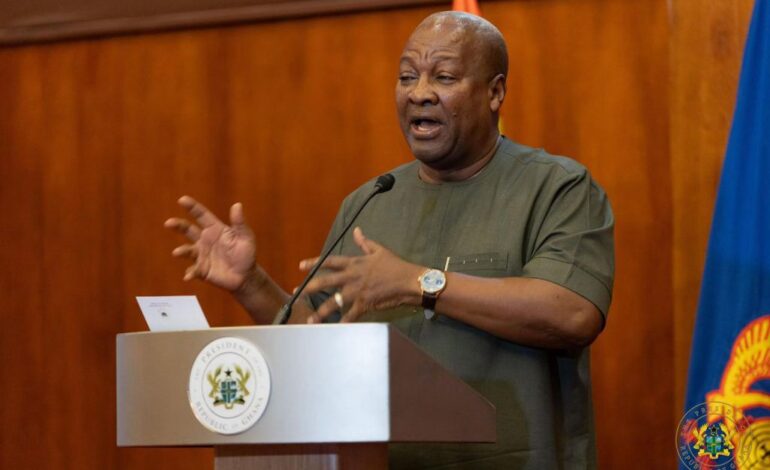
President John Dramani Mahama has called on African nations to end their reliance on the U.S. dollar and other foreign currencies in trade between African countries, saying the practice continues to slow integration and weaken economic sovereignty.
Speaking during a high-level engagement on the margins of the 39th Summit of the African Union in Addis Ababa, Mahama said Africa must urgently reform the financial systems that underpin intra-continental trade.

He questioned why businesses trading within Africa should be required to convert their local currencies into dollars before settling transactions with partners on the same continent, describing the arrangement as costly and unnecessary.

“We cannot continue to trade among ourselves using third-party currencies,” Mahama said, stressing that economic integration must be supported by financial independence.
At the centre of his proposal is the accelerated implementation of the Pan-African Payment and Settlement System (PAPSS), a platform designed to enable cross-border payments in local African currencies. The system is intended to reduce transaction costs, ease pressure on foreign exchange reserves, and allow businesses to settle payments directly without routing transactions through external currencies.
The initiative supports the broader goals of the African Continental Free Trade Area (AfCFTA), which aims to create a single continental market for goods and services. While AfCFTA has established trade frameworks and tariff reductions, leaders have increasingly emphasized that payment systems must evolve to match the ambitions of continental trade integration.

Mahama said that strengthening local-currency settlement mechanisms would make it easier for small and medium sized enterprises to participate in cross-border trade and would help keep more value circulating within African economies.
In addition to payment reforms, the Ghanaian president outlined domestic measures aimed at strengthening economic independence. He announced plans to reduce reliance on foreign financing in key sectors and to increase local processing of raw materials, including ending the export of unprocessed minerals by 2030. These steps, he said, are part of a broader strategy to retain more value within national and continental economies.
Mahama urged African governments to move beyond policy discussions and focus on implementation, saying the time has come to translate agreements into tangible change.
For Ghana, he said, the shift toward local-currency trade and stronger continental systems is not simply symbolic. It is a practical step toward building a more integrated, competitive and self-reliant Africa.
RELATED: