
Wayne Lumbasi

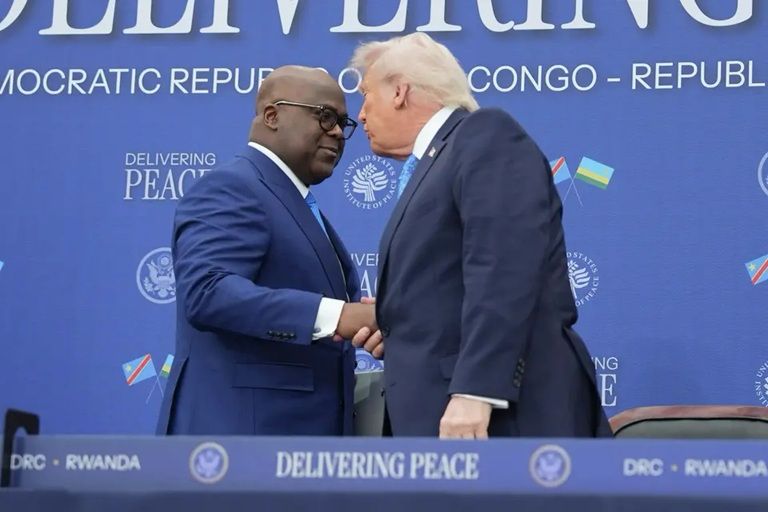
The Democratic Republic of Congo (DRC) and the United States have reached a $1.2 billion strategic health partnership aimed at bolstering one of Africa’s most fragile health systems over the next five years. The comprehensive pact spans 2026 through 2031 and combines external support with a significant escalation in domestic health investment by the DRC.
Under the agreement, the United States will provide $900 million in targeted health assistance, while the DRC government will increase its health expenditure by $300 million over five years. This co-financing model marks a departure from traditional grant-based aid by tying significant external financing to active domestic investment, in part to promote longer-term sustainability and stronger health system ownership.

Much of the funding is earmarked for combating persistent infectious diseases and improving core health services. The DRC faces ongoing challenges with malaria, HIV/AIDS, tuberculosis (TB), and periodic polio outbreaks, all of which contribute to high disease burdens across the country. The partnership allocates resources for expanded disease prevention and treatment programmes, vaccination campaigns, and efforts to strengthen public health infrastructure.

Beyond disease-specific interventions, the agreement gives substantial emphasis to enhancing epidemiological surveillance, health workforce capacity, and emergency response systems. Investments in these areas aim to improve the ability to detect and respond to outbreaks earlier, potentially preventing local flare-ups from developing into widespread crises. Expansion of maternal and child health services is also a priority, addressing persistently high rates of maternal and under-five mortality in many provinces.
While the DRC deal represents a major commitment, it comes amid a backdrop of mixed responses to similar health partnership proposals in other African countries, where negotiations for comparable agreements with the United States have encountered obstacles.
In Kenya, a proposed pact was blocked by a court ruling in late 2025 after legal challenges were raised over concerns about the protection of citizens’ health data and whether safeguards were adequate under Kenyan law. The judgment temporarily halted implementation of that health cooperation framework, raising questions about data governance and national sovereignty in such agreements.

In southern Africa, Zambia publicly expressed reservations during negotiations over the terms of a potential U.S. health partnership and, as a result, did not finalise a deal. Officials cited concerns about conditions attached to financing and how provisions related to reporting and data sharing might impact domestic policy and confidentiality protections.
Similarly, Zimbabwe withdrew from negotiations on a health pact after clarifying its position on data management and sovereign rights. These developments underscored complex political and legal sensitivities that can arise when external funding is paired with parameters on information sharing or health system governance.
The varied outcomes in Kenya, Zambia and Zimbabwe illustrate a broader pattern of debate and negotiation around health funding models that combine significant external financing with requirements for data exchange and structural commitments. Some stakeholders advocate such partnerships on the basis that they can strengthen health outcomes and systems, while others raise legitimate concerns about national autonomy, legal frameworks, and transparency.
The DRC agreement’s co-financing design reflects these evolving dynamics. By requiring a defined increase in domestic health spending alongside external contributions, it seeks to balance external support with national ownership. Over the next five years, the programme is expected to expand treatment coverage, improve vaccine delivery and supply chains, and modernise disease surveillance, with the ultimate goal of reducing disease burden and building more resilient healthcare infrastructure.
RELATED: