Faith Nyasuguta
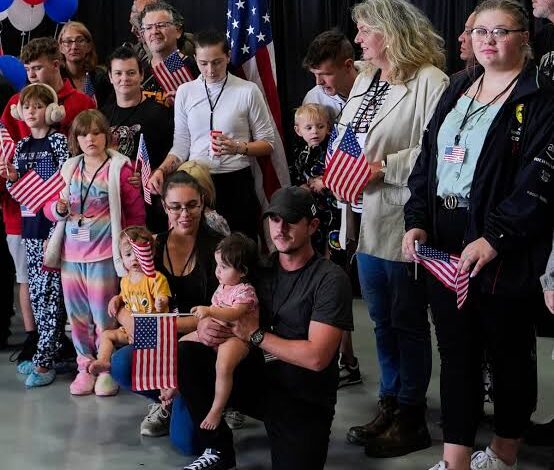
The United States is preparing to dramatically scale up refugee admissions for white South Africans – to levels that could eclipse its own global refugee ceiling.
According to an internal State Department contracting document dated January 27, U.S. officials are aiming to process up to 4,500 refugee applications per month from white South Africans. If implemented at full capacity, that monthly target alone would dwarf President Donald Trump’s publicly stated refugee cap of 7,500 total admissions worldwide for fiscal year 2026.

To make it happen, Washington is expanding operations on the ground. The document outlines plans to install temporary processing trailers inside the U.S. embassy compound in Pretoria, effectively building a dedicated refugee pipeline. The move follows what officials described as operational disruptions at a previous processing site in Johannesburg, after South African authorities conducted an immigration raid that allegedly compromised activities.
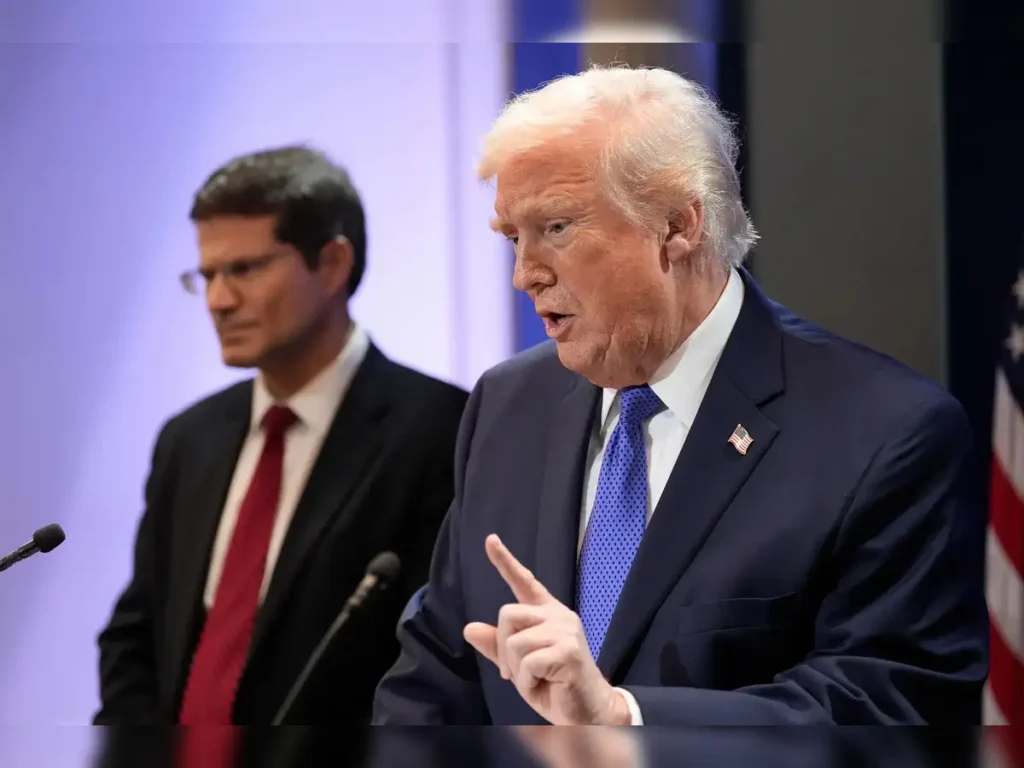
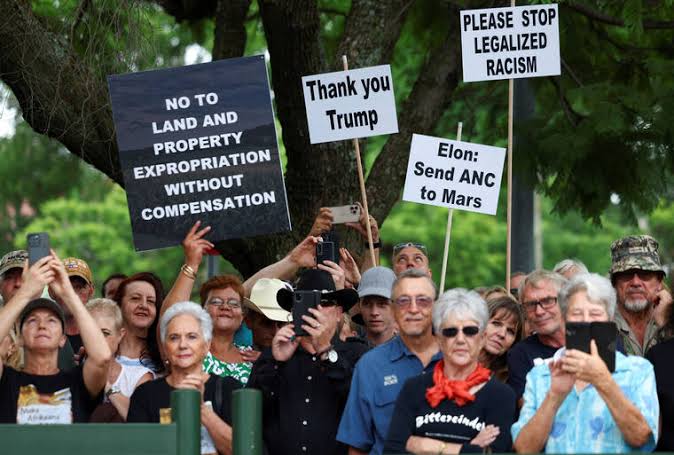
The expansion marks a sharp acceleration of a program launched in May 2025, when Trump carved out a controversial exception to his broader refugee suspension policy. Shortly after returning to office in 2025, Trump froze most refugee admissions as part of a sweeping immigration crackdown. Weeks later, however, he introduced a specific pathway for white South Africans of Afrikaner descent, arguing they were victims of violent persecution.
“They had been violently persecuted,” Trump said at the time.
The South African government rejected that characterization outright, dismissing claims of systemic targeting. Refugee advocacy groups in the U.S. also pushed back, arguing that humanitarian protections should not be selectively applied based on race or politics.
As of January 31, roughly 2,000 white South Africans had reportedly entered the United States under the program. But the pace appears to be increasing. The newly revealed 4,500-per-month processing goal signals an intent to industrialize the system – even as refugee admissions from conflict zones in the Middle East, Latin America, and parts of Africa remain sharply restricted.
The math has raised eyebrows. At 4,500 applications per month, admissions from South Africa alone could surpass 50,000 annually – far beyond the 7,500 cap Trump announced for 2026. Internal discussions last year reportedly floated a broader ceiling between 40,000 and 60,000 refugees, but no public adjustment has been made to reflect the South Africa-focused expansion.
Meanwhile, logistical uncertainty lingers. A U.S. official familiar with the situation indicated that refugee travel – including for white South Africans – has recently faced temporary pauses due to administrative bottlenecks.
Interest in the program appears substantial. The South African Chamber of Commerce in the U.S. has said more than 67,000 individuals have expressed interest in relocating, underscoring both demand and the political volatility surrounding the initiative.
At its core, the policy reflects a striking shift in refugee politics. While Washington tightens doors elsewhere, it is building new ones in Pretoria. Supporters frame it as protection for a vulnerable minority. Critics call it selective humanitarianism.
What is clear is this: refugee admissions – once framed as a neutral response to global crises – have become a flashpoint in domestic politics, diplomatic relations, and debates over race, persecution, and power.
RELATED: