
Wayne Lumbasi

Zimbabwe has intensified its push to control the flow of its strategic mineral resources by enforcing a ban on the export of raw minerals and lithium concentrate, a move aimed at accelerating domestic processing, industrial growth, and long-term economic value retention.
The move reflects a broader strategy to curb the export of unprocessed and semi-processed minerals, particularly lithium, which has rapidly emerged as one of the country’s most strategic resources due to soaring global demand for electric vehicle batteries and energy storage technologies. As Africa’s leading lithium producer, Zimbabwe has seen a surge in mining investment and output in recent years, with large volumes of lithium concentrate historically shipped abroad for refining and processing.

The ban builds on earlier measures introduced to restrict the export of raw lithium ore, signalling a long-term transition toward beneficiation and local processing. By halting shipments of raw minerals and concentrates, the policy is designed to push mining companies to establish refining and processing facilities within the country, ensuring that higher-value products are produced domestically rather than exported in raw form.

For years, much of Zimbabwe’s lithium, chrome, and other critical minerals have been exported as concentrates to overseas processing hubs, particularly in Asia, where they are refined into battery-grade materials and industrial inputs. This structure has limited the country’s ability to capture full economic benefits from its mineral resources, including job creation, technology transfer, and higher export revenues linked to finished and semi-finished mineral products.
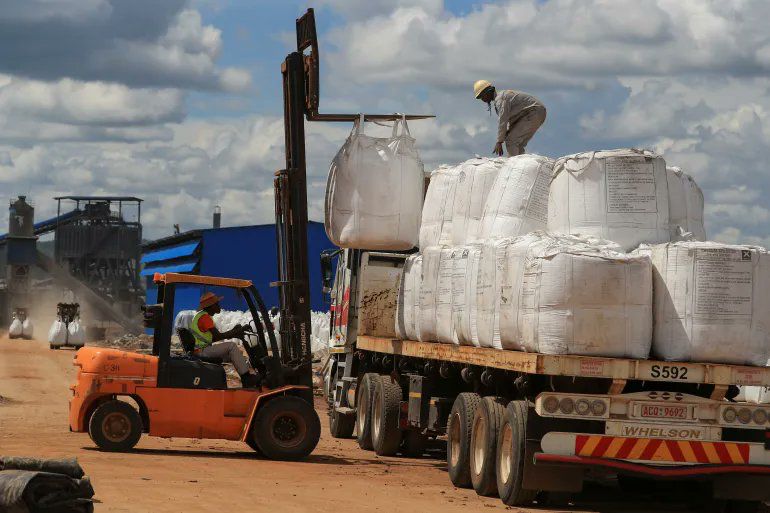
The latest restriction is expected to accelerate the development of local processing infrastructure, including lithium sulphate and chemical conversion plants tied to major mining operations. These facilities are central to the country’s ambition to move up the global battery value chain by producing intermediate and refined lithium products rather than relying on raw exports.
In the short term, the export ban may disrupt supply chains and reduce foreign currency inflows from mineral shipments, given the strong international demand for Zimbabwean lithium concentrate. However, the longer-term objective is to strengthen economic resilience by building a value-added mining sector capable of supporting downstream industries and industrial growth.
The policy also aligns with a growing trend among resource-rich African nations to tighten control over raw mineral exports and prioritise local beneficiation. Within this context, the ban underscores a strategic repositioning of Zimbabwe’s mining sector, shifting from a model centred on raw commodity exports to one focused on processing, industrial development, and greater participation in the global critical minerals market.
RELATED: