Wayne Lumbasi

Tensions between Eritrea and Ethiopia have intensified after Eritrea firmly rejected allegations that it has deployed troops inside Ethiopian territory and provided support to armed rebel groups. Eritrea dismissed the claims as false, warning that such accusations risk worsening relations between the two Horn of Africa neighbours.
The dispute emerged after Ethiopia accused Eritrea of sending forces across their shared northwestern border and working alongside insurgent groups operating within Ethiopia. Ethiopia described the alleged actions as a direct violation of its sovereignty and called for the immediate withdrawal of any Eritrean troops while demanding an end to all forms of cooperation with armed groups.

Eritrea responded swiftly, issuing a statement denying the accusations and describing them as fabricated and politically motivated. Eritrea maintained that it has not deployed troops inside Ethiopia and insisted it has no involvement in supporting rebel movements. The government further argued that the claims are part of a broader pattern of hostile rhetoric that threatens to inflame tensions rather than encourage dialogue.

The renewed dispute highlights the fragile and complex relationship between the two countries, shaped by decades of conflict and uneasy peace. Eritrea gained independence from Ethiopia in 1993, but relations quickly deteriorated, culminating in a brutal border war between 1998 and 2000 that claimed tens of thousands of lives. Although a peace agreement signed in 2018 raised hopes of reconciliation, mistrust has continued to linger beneath the surface.

Relations faced further strain during the conflict in Ethiopia’s Tigray region between 2020 and 2022, when Eritrean forces fought alongside Ethiopian troops against the Tigray People’s Liberation Front. The war deepened divisions and left lasting tensions that continue to influence diplomatic and security relations between the two countries.
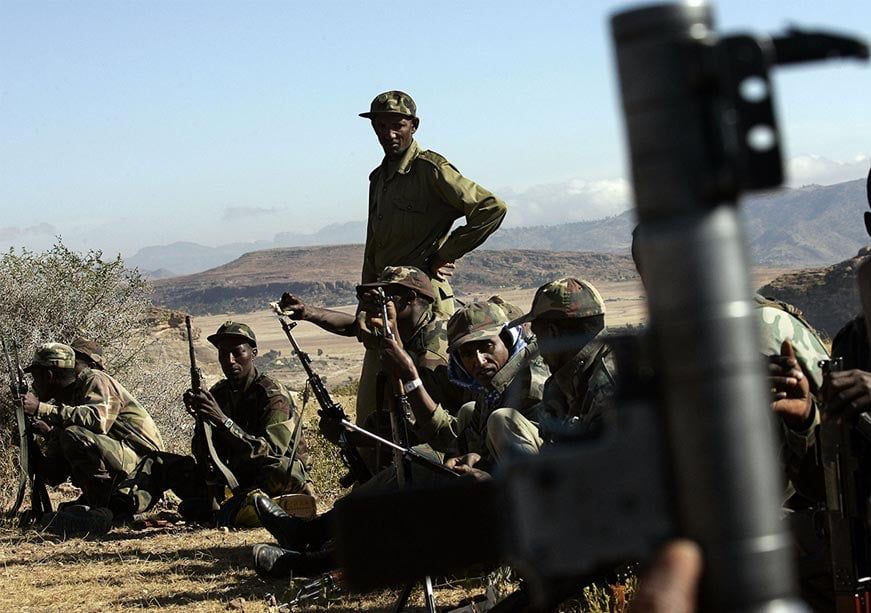
Ethiopian soldiers stationed near the Eritrean border in 1999 during the Eritrean-Ethiopian War/NYT/
Ethiopia’s latest accusations also come at a time when the country is dealing with ongoing internal security challenges, particularly in northern regions where clashes involving armed groups have persisted. Ethiopia has suggested that external backing has contributed to the continuation of some insurgencies, a claim Eritrea strongly disputes, arguing that Ethiopia’s security challenges are rooted in its internal political and social dynamics.

Beyond security concerns, the dispute reflects broader geopolitical sensitivities in the region. Ethiopia has repeatedly expressed interest in gaining greater access to the Red Sea, an issue closely tied to Eritrea’s sovereignty and national interests. The matter remains highly sensitive and has contributed to underlying tensions between the two neighbours.
Despite the sharp exchange of accusations, Ethiopia has signalled that it remains open to diplomatic engagement to resolve the dispute. Eritrea, while rejecting the allegations, has also stated that it does not seek escalation. However, the firm positions adopted by both sides suggest that relations remain strained, raising fears that continued confrontation could destabilise an already fragile region.
RELATED: