Faith Nyasuguta

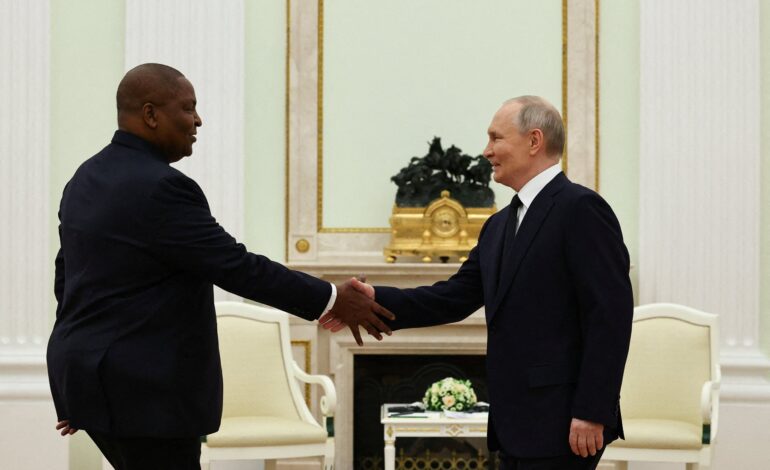
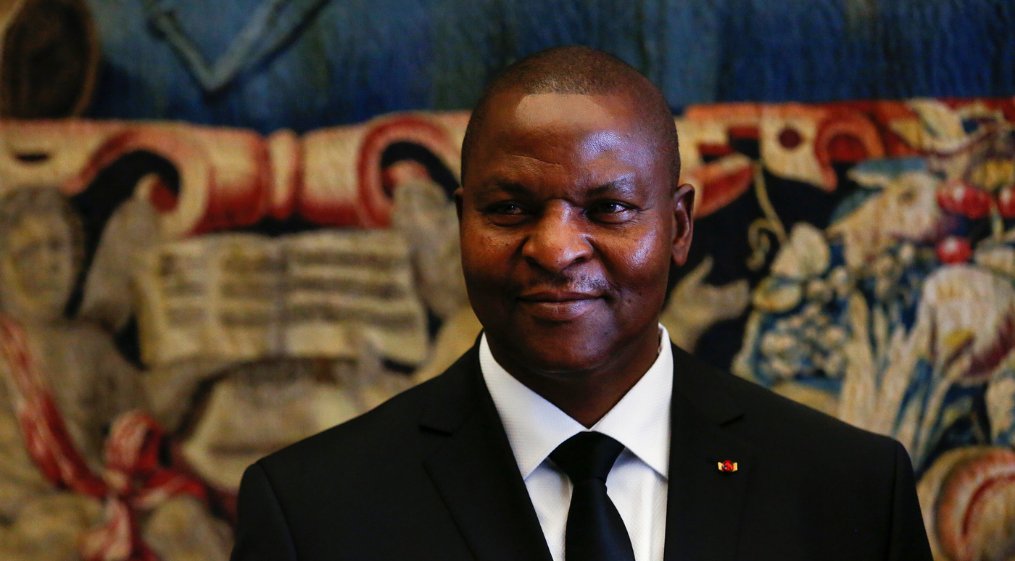
President Faustin-Archange Touadera of the Central African Republic (CAR) has expressed his country’s desire to establish a drone training center in partnership with Russia, showcasing the deepening military and security cooperation between Bangui and Moscow. The proposal reflects CAR’s ongoing efforts to modernise its armed forces while addressing persistent security challenges posed by armed groups across the country.
Speaking during discussions with Russian officials, Touadera highlighted the growing importance of unmanned aerial systems in modern warfare and national security. He noted that drones have become critical tools for surveillance, reconnaissance, border monitoring and tactical operations, particularly in countries facing vast territory and limited conventional military resources. For CAR, which has struggled for more than a decade with instability and insurgency, drone technology is seen as a potential force multiplier.

The proposed drone training center would focus on training Central African military personnel in the operation, maintenance and tactical deployment of unmanned aerial vehicles. According to officials familiar with the discussions, the facility would also include technical instruction, data analysis and command-and-control coordination, allowing CAR’s forces to better integrate drones into their security operations.

Russia has been a key security partner for CAR in recent years, providing military instructors, equipment and training under bilateral agreements. The partnership expanded after the CAR government sought alternative allies to help stabilise the country, following years of limited success by international peacekeeping efforts. Russian support has been framed by Bangui as crucial in strengthening state authority and restoring security in areas previously controlled by armed groups.

Touadera has consistently defended cooperation with Russia as sovereign and strategic, arguing that it responds to the country’s urgent security needs. He has stated that CAR remains open to working with all partners willing to respect its independence and contribute meaningfully to peace and development.
The interest in drone capabilities comes amid a broader global shift toward unmanned systems in both military and civilian contexts. Drones are increasingly used for intelligence gathering, battlefield assessment and rapid response, but also for civilian purposes such as mapping, disaster response and infrastructure monitoring. In fragile states like CAR, officials believe drones could help monitor remote regions where road access is limited and state presence remains weak.

However, the proposal is likely to attract international scrutiny. Russia’s expanding military footprint in parts of Africa has drawn criticism from Western governments and human rights organisations, which have raised concerns about accountability, transparency and the militarisation of fragile states. Any new security initiative involving advanced technology such as drones is expected to intensify debate over CAR’s foreign alliances and long-term security strategy.
Regional analysts note that while drone technology could enhance operational capacity, it also raises questions about regulation, airspace management and civilian protection. Effective oversight, they argue, will be essential to ensure that drones are used in accordance with international humanitarian law and do not exacerbate tensions or harm civilians.
For the Central African Republic, the proposed training center is part of a broader push to professionalise its armed forces and reduce reliance on external security actors over time. Government officials say building domestic capacity is key to achieving lasting stability and safeguarding national sovereignty.
Russia, for its part, has presented itself as a partner willing to share expertise and technology without political conditionalities. If realised, the drone training center would mark another milestone in Moscow’s security engagement with Bangui and could serve as a model for similar cooperation elsewhere on the continent.
While details such as location, timeline and funding have not been finalised, Touadera’s statement signals a clear intention to deepen military-technical cooperation with Russia. As CAR continues to navigate complex security issues, the move shows how emerging technologies are reshaping defence strategies in Africa, even in some of the continent’s most fragile states.
RELATED: